He dressed badly on purpose
Rough camel hair, in a church where bishops had started wearing silk. At Marmoutier soft cloth counted as a fault.
Ch. 10 Read it in the book →
I am Sulpicius Severus. I was a lawyer, and I wrote this man’s life while he was still alive to contradict me. He never did.


Martin of Tours · c. 316–397 · every line of this is in the book
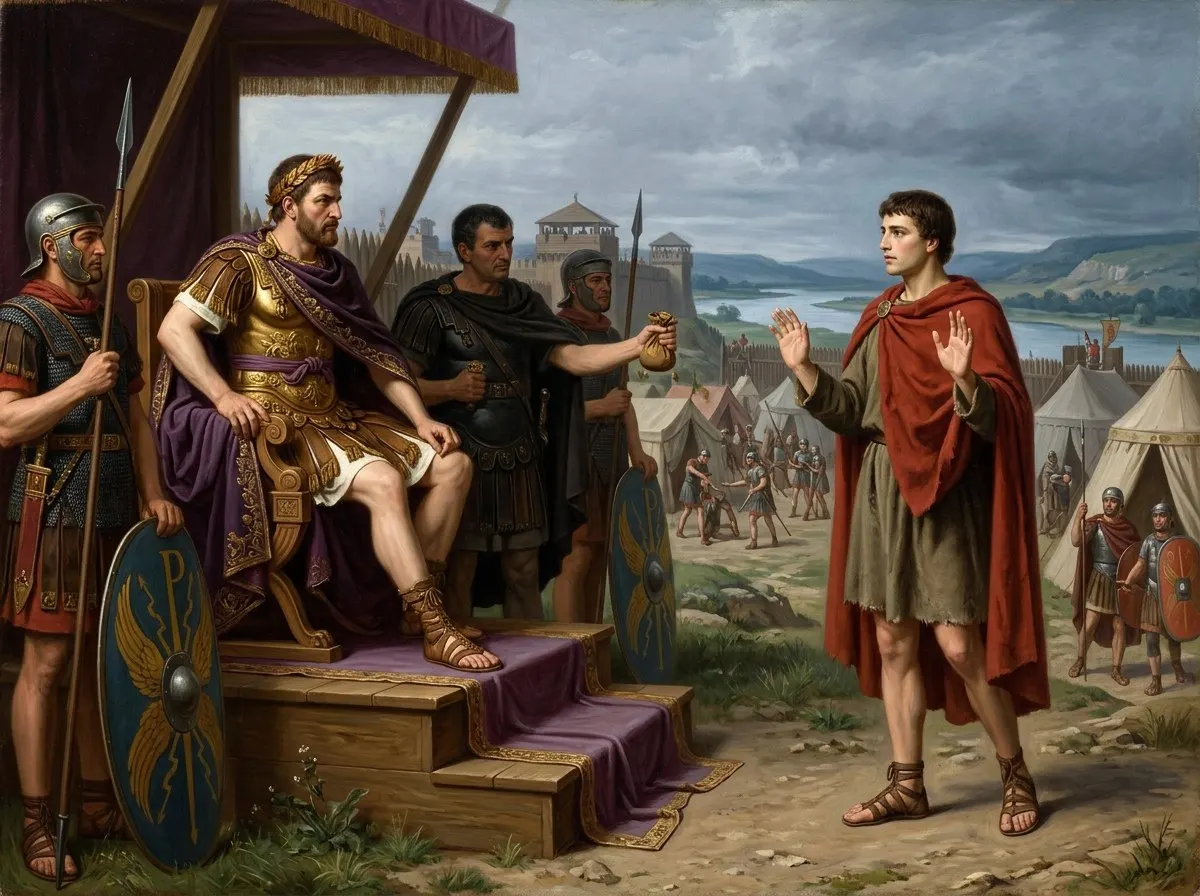
He told a Caesar to his face: I will not fight.
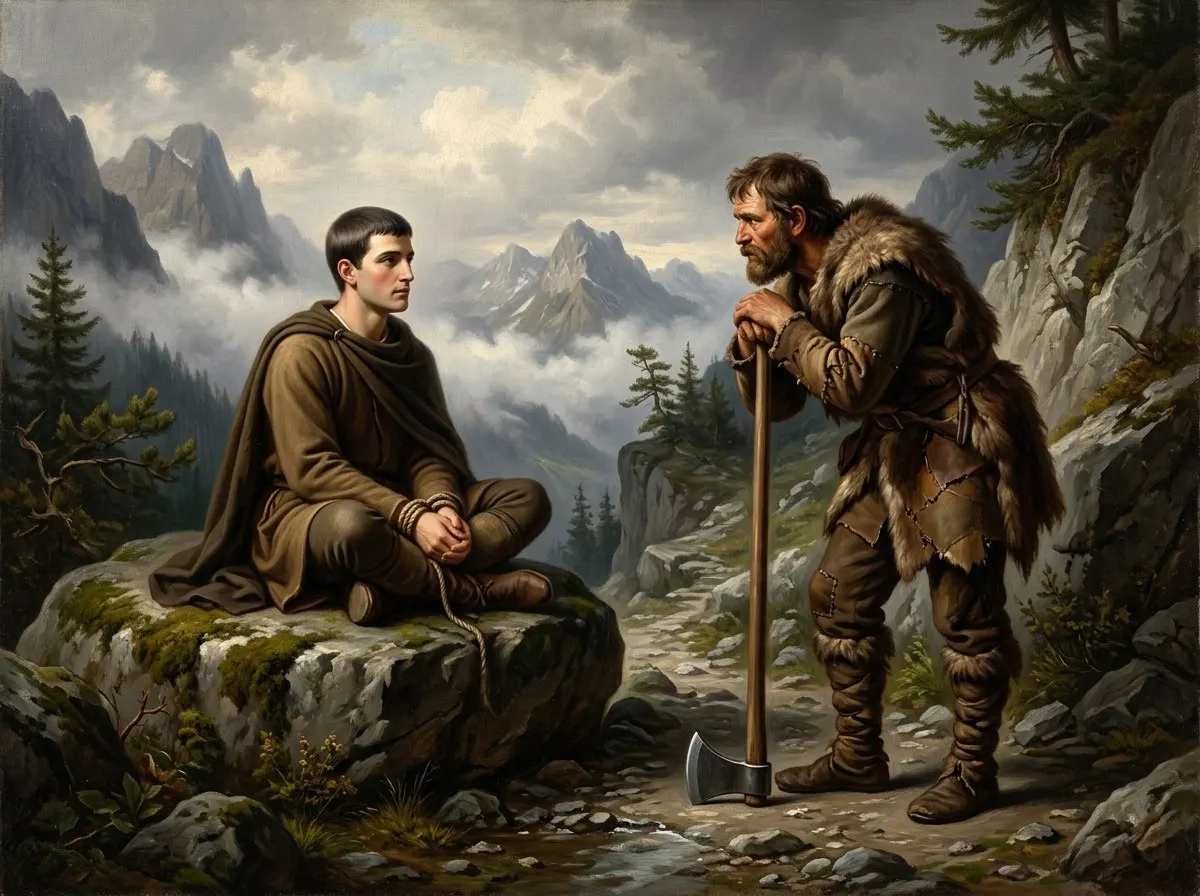
He felt sorry for the bandit who tied him up.
A whole city kidnapped him to make him its bishop.
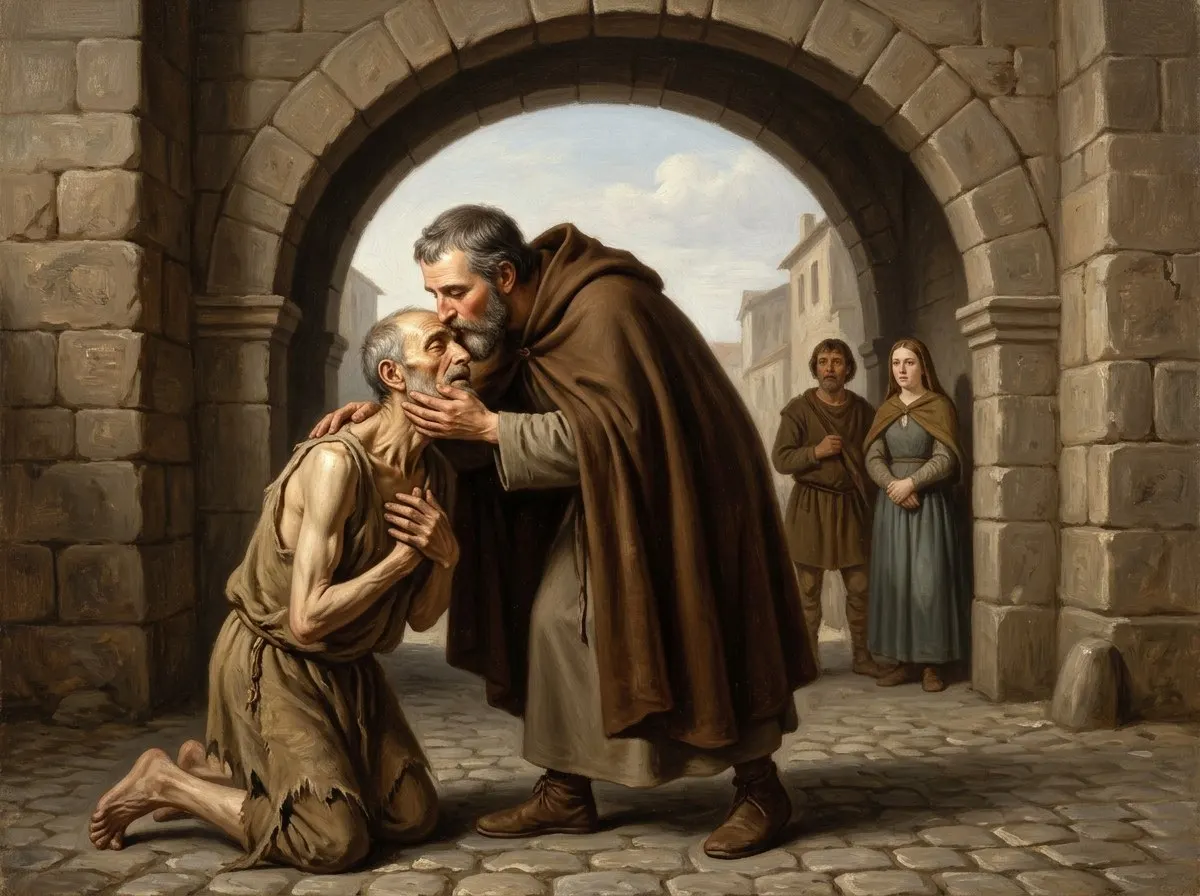
He kissed the man everyone else backed away from.
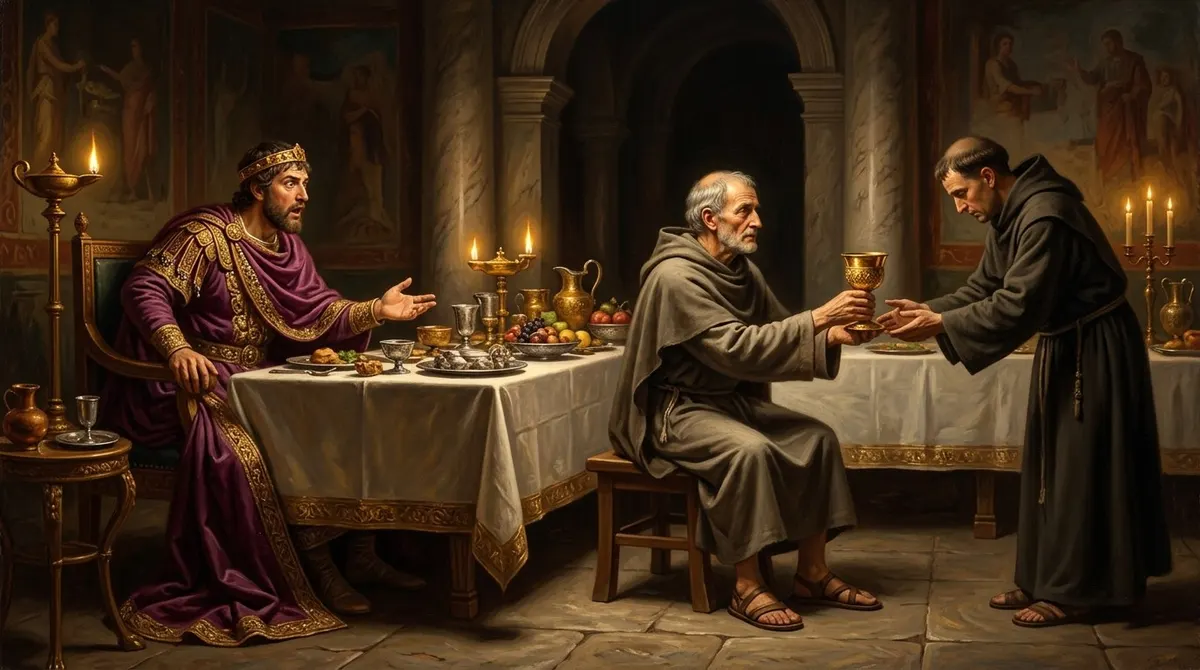
He made an emperor wait for his own cup.
He looked at a Christ dressed in gold and said: you are not him.
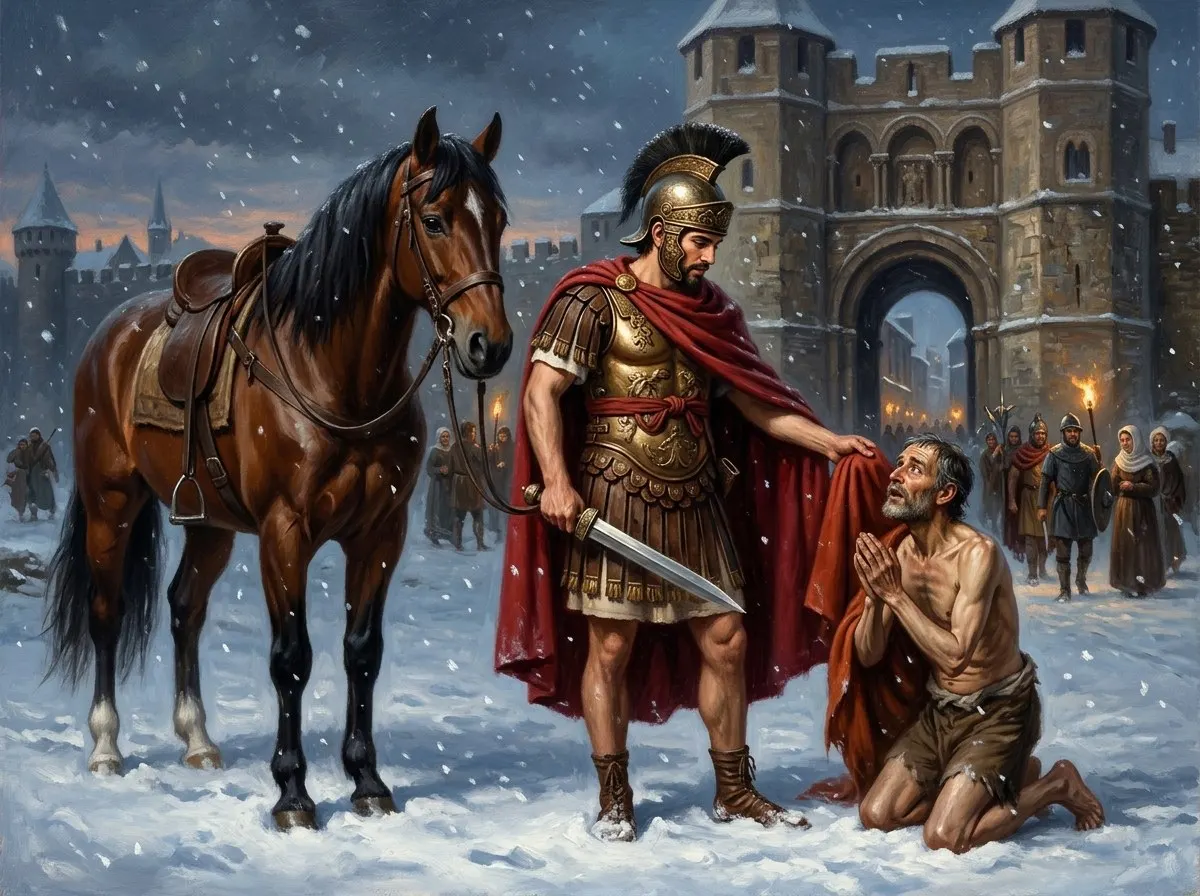
And one winter he cut his only cloak in two for a stranger.
I — IX
Nine scenes. Every one of them comes from the book I wrote around 396, when Martin was still walking the roads of Gaul. Where I only heard a thing second-hand, I say so.
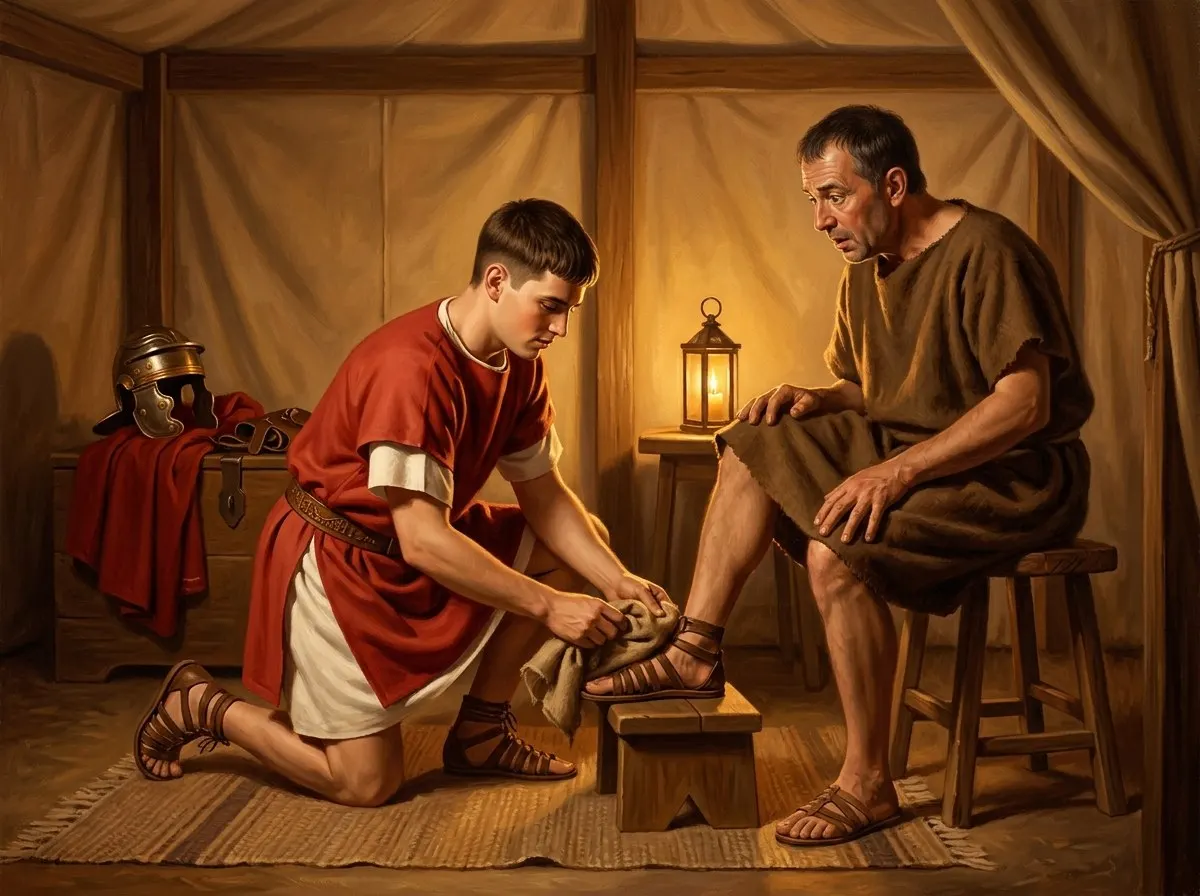
Sabaria → Ticinum (today Szombathely, Hungary → Pavia, Italy)
Margin noteBorn c. 316 by the old reckoning, c. 336 by recent scholarship. I never asked him. He would have changed the subject.
Read it in the book · Ch. 2 → Amiens
“Martin, still only a catechumen, clothed me with this.”
Margin noteHe was baptised at eighteen. The dream did not make him proud. I checked.
Read it in the book · Ch. 3 → Worms, 356
“I am a soldier of Christ. I cannot fight.”
Margin noteNobody died that morning. I think that was the point.
Read it in the book · Ch. 4 → Poitiers, then the Alps
Margin noteThe robber walked him back to the road and later became a monk. This story is said to come from him.
Read it in the book · Ch. 5 →
Ligugé, then Marmoutier beside Tours
Margin noteMany of them came from good families and soft beds. I mention it because I did too.
Read it in the book · Ch. 7, 10 → Tours, 371
Margin noteThe verse ended: “…to defeat the enemy and the defender.” In the Latin we used, the word is defensorem.
Read it in the book · Ch. 9 →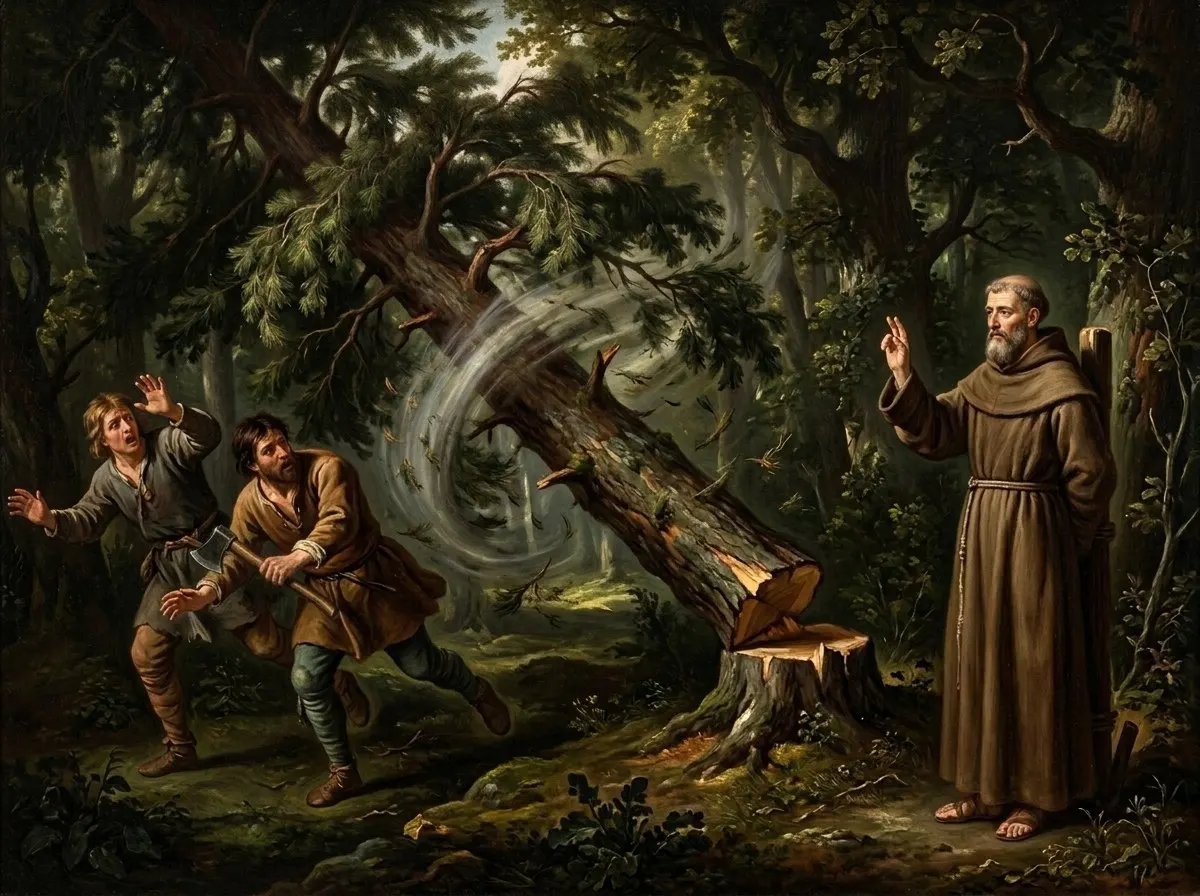
Near Tours, and a village with a pine
Margin noteI was not at the pine. I spoke with people who were. Judge as you like.
Read it in the book · Ch. 11, 13 → Trier, and a cell at Marmoutier
“I will not believe Christ has come unless I see him bearing the marks of the Cross.”
The light went out. No scars, no Christ.
Margin noteHe told me this one himself.
Read it in the book · Ch. 20, 24 →
Candes → Tours, November 397
“Lord, if your people still need me, I do not refuse the work.”
Margin noteMy book ends before this. He was alive when I finished it. I told the rest in letters.
Read it in the book · Epilogue →The route of his life
Pannonia to the Loire, on foot, on horseback and once under arrest. You can still walk most of it: the Via Sancti Martini is a signposted route across Europe.
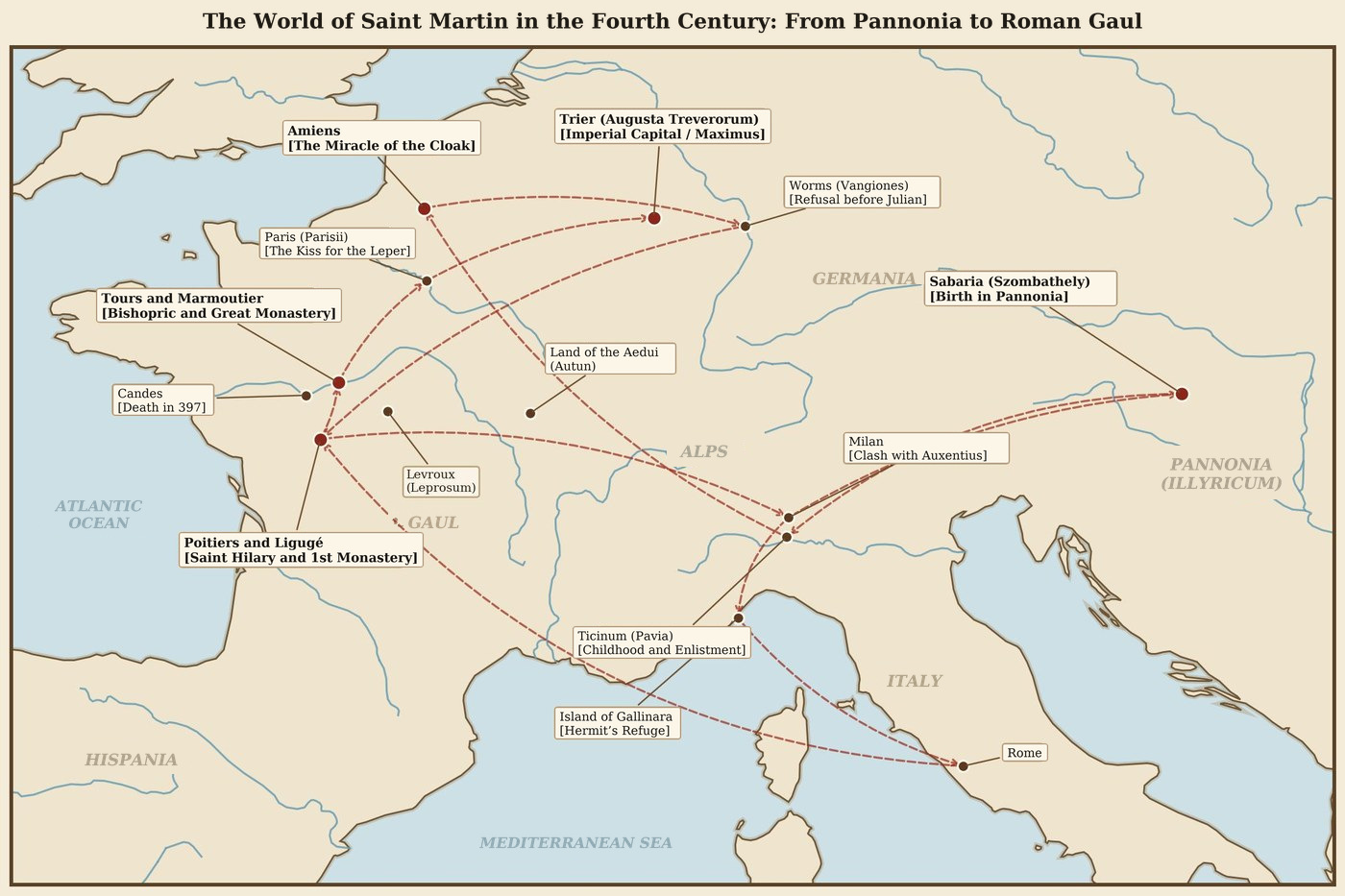
Sabaria
Where he was born, a garrison town in Pannonia. Today in Hungary.
Ticinum
Where he grew up and where the army took him at fifteen.
Samarobriva
The gate, the winter, the cloak.
Borbetomagus
Where he refused Julian’s gold and offered to walk out unarmed.
Pictavium
Hilary’s city. He came here to learn.
Locociacum
His first monastery, just outside Poitiers. Monks still live there.
Maius Monasterium
The hut, the caves in the cliff, the copyists.
Caesarodunum
The city that kidnapped him and kept him for twenty-six years.
Augusta Treverorum
The imperial court, where he would not flatter anyone.
Condate
Where the Vienne meets the Loire, and where he died.
Reported by Sulpicius
The other bishops of Gaul found him embarrassing. Here is why.
His feast is 11 November, the day he was buried. None of what follows is in my book; it grew up in the centuries afterwards.
In Portugal, São Martinho means a magusto, a gathering around roasted chestnuts, with the year’s new wine and água-pé, a light drink made from the pressed grapes. A run of warm days around that date is called St. Martin’s Summer.
In Germany, the Netherlands and much of central Europe, children walk through the dark with paper lanterns.
Not to be confused with Martin of Braga, a sixth-century bishop in what is now Portugal, who was named after him.
Sulpicius Severus
Twenty-seven short chapters, a letter to a friend, and an epilogue. A narrator explains the Roman world as you go. Fourteen illustrations. It takes an evening.

The Life of Saint Martin
Sulpicius Severus
Illustrated Contemporary Edition
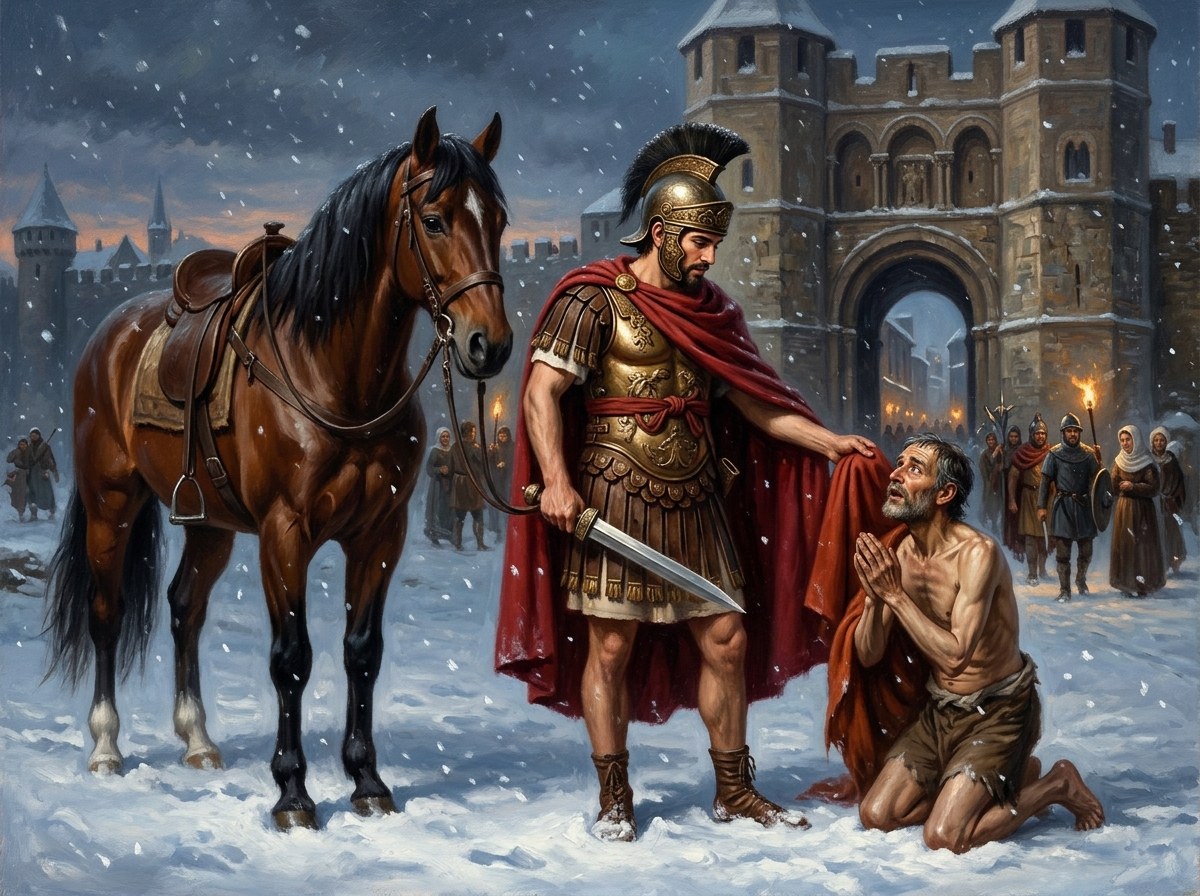
It starts at a city gate, in the cold.
17 · Language
Free to read, free to download, free to share. No signup.

English
Master edition (English)The Life of Saint Martin · Illustrated Contemporary Edition · Version 1.0
Portuguese (Portugal)
Original Portuguese editionA Vida de São Martinho · Edição Contemporânea Ilustrada · Version 2.0
Spanish
Machine-translated, review in progressLa vida de san Martín · Edición contemporánea ilustrada · Version 0.9
French
Machine-translated, review in progressLa Vie de saint Martin · Édition contemporaine illustrée · Version 0.9
Italian
Machine-translated, review in progressLa vita di san Martino · Edizione contemporanea illustrata · Version 0.9
Latin (original)
Original LatinPatrologia Latina, vol. 20 (Migne, 1845)
German
Machine-translated, review in progressDas Leben des heiligen Martin · Illustrierte zeitgenössische Ausgabe · Version 0.9
Hungarian
Machine-translated, review in progressSzent Márton élete · Illusztrált, mai nyelvű kiadás · Version 0.9
Polish
Machine-translated, review in progressŻywot świętego Marcina · Ilustrowane wydanie współczesne · Version 0.9
Portuguese (Brazil)
Machine-translated, review in progressA Vida de São Martinho · Edição Contemporânea Ilustrada · Version 0.9
Dutch
Machine-translated, review in progressHet leven van Sint-Maarten · Geïllustreerde hedendaagse uitgave · Version 0.9
Ukrainian
Machine-translated, review in progressЖиття святого Мартина · Ілюстроване сучасне видання · Version 0.9
Korean
Machine-translated, review in progress성 마르티노의 생애 · 삽화가 있는 현대어판 · Version 0.9
Tagalog
Machine-translated, review in progressAng Buhay ni San Martin · Kontemporaneong Edisyong May Ilustrasyon · Version 0.9
Arabic
Machine-translated, review in progressحياة القديس مارتينوس · طبعة معاصرة مصوّرة · Version 0.9
Serbian (Cyrillic)
Machine-translated, review in progressЖивот светог Мартина · Савремено илустровано издање · Version 0.9
Serbian (Latin)
Machine-translated, review in progressŽivot svetog Martina · Savremeno ilustrovano izdanje · Version 0.9
Tell us which language you want next. The most requested ones go first.
Native speakers make this book better. An hour of proofreading is a real gift.
Source edition: The Life of Saint Martin, Sulpicius Severus. Illustrated Contemporary Edition, v1.0 (2026-11-14). English text prepared from the contemporary Portuguese edition (AI-assisted translation; native-speaker review pending). CC BY-SA 3.0 / GNU FDL.
No pressure and no pitch. If Martin made you curious about what he believed, these are honest places to begin.
What would you do with half?
Enjoy the book. If you want one email when a new language arrives:
Tell me