The placesTours, France · since 397
The tomb of Saint Martin
He asked for a bed of ashes. Sixteen centuries later people still come down the stairs to where he lies.
Benjamin Smith · CC BY-SA 4.0
The tomb
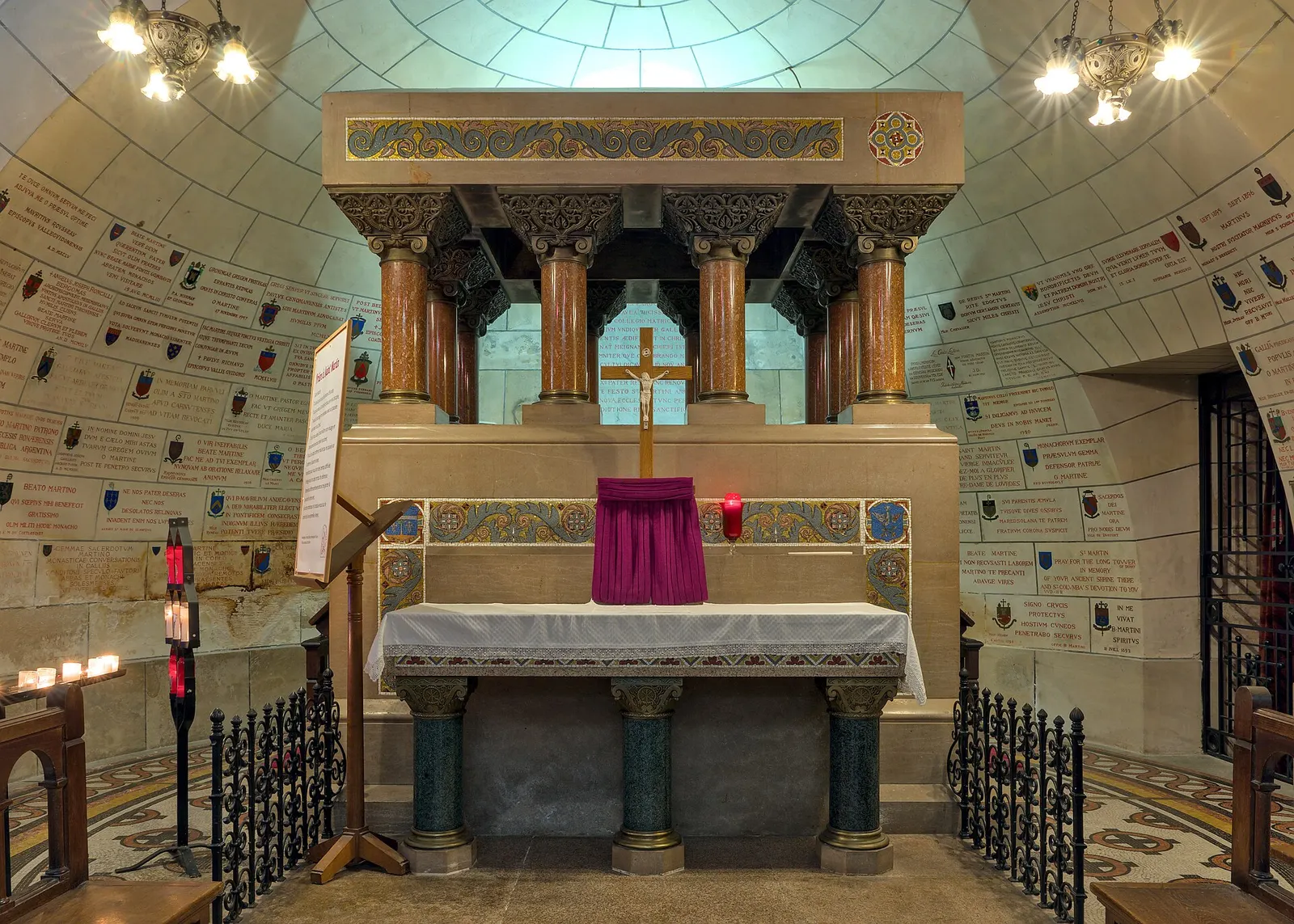
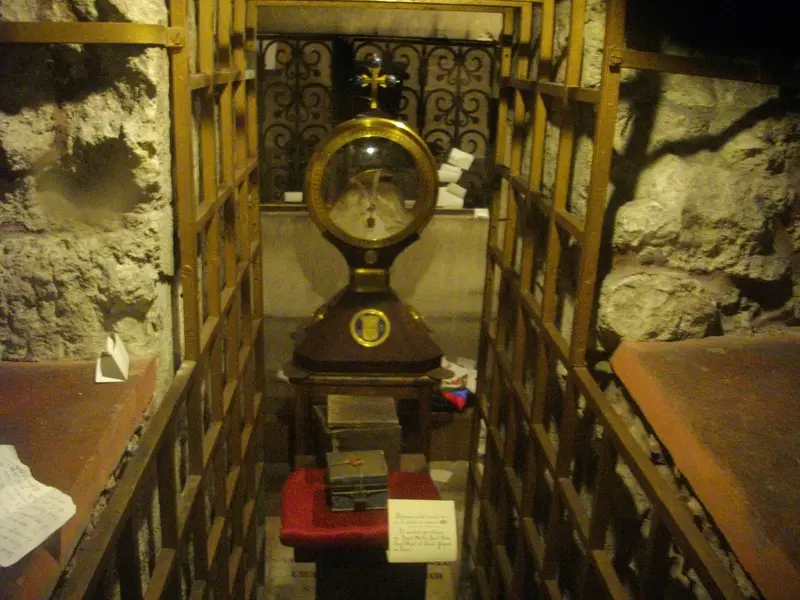
Two wide staircases lead down to the crypt. The tomb is of marble and pink sandstone with mosaic, shaped like a sarcophagus and resting on ten columns. It covers the stones of the original burial. Openings in its sides let you see the ancient slab and a reliquary.
Martin died at Candes on 8 November 397 and was buried in Tours three days later. Four churches have stood over the grave since. It was lost for sixty years after the French Revolution and found again in a cellar. This page follows the place from the day of the burial to what happens there now. Most of what follows comes from later sources, not from Sulpicius.
Later tradition
- 397buried here on 11 November
- 4churches built over the grave, one after another
- 1860the year the tomb was found again, under a house
- 5,000kilometres of walking routes that lead here
How he came to be buried here
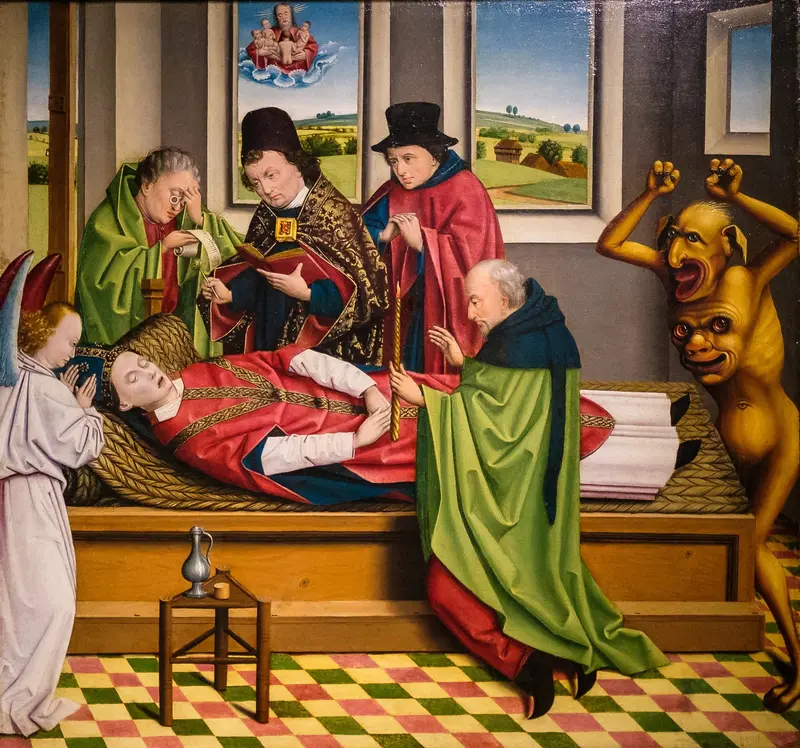
Martin was an old man when he went to Candes, at the western edge of his diocese, to settle a quarrel among the clergy. He died there, lying on ashes by his own wish.
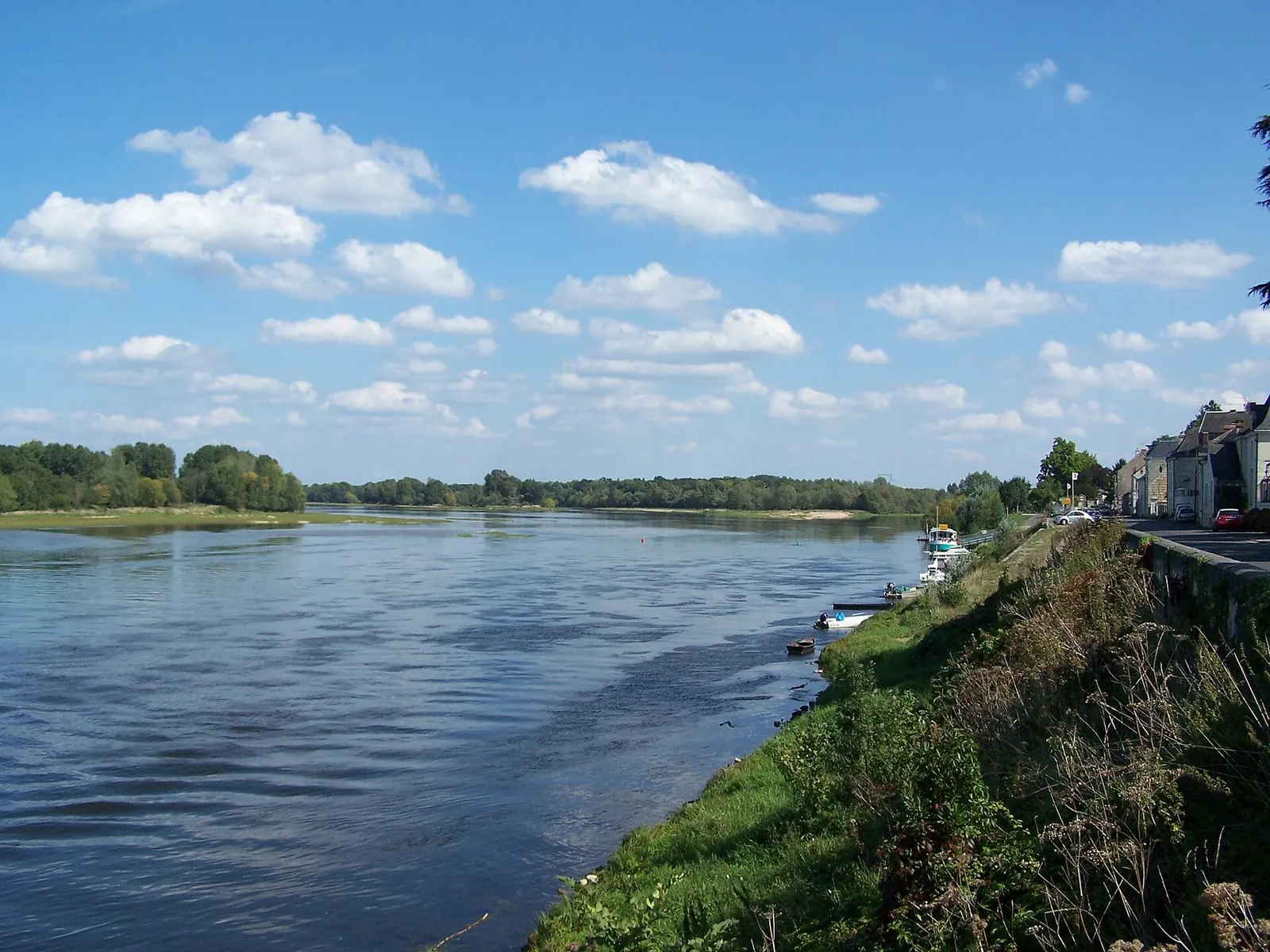
Candes stands where the river Vienne joins the Loire, between Tours and Poitiers, and both cities wanted the body. The tradition, which goes back to Gregory of Tours two centuries later, is that the men of Tours passed it out through a window at night and took it up the Loire by boat.
A legend adds that flowers opened along the banks as the boat went by, although it was November. That is one explanation for the name St Martin’s Summer.
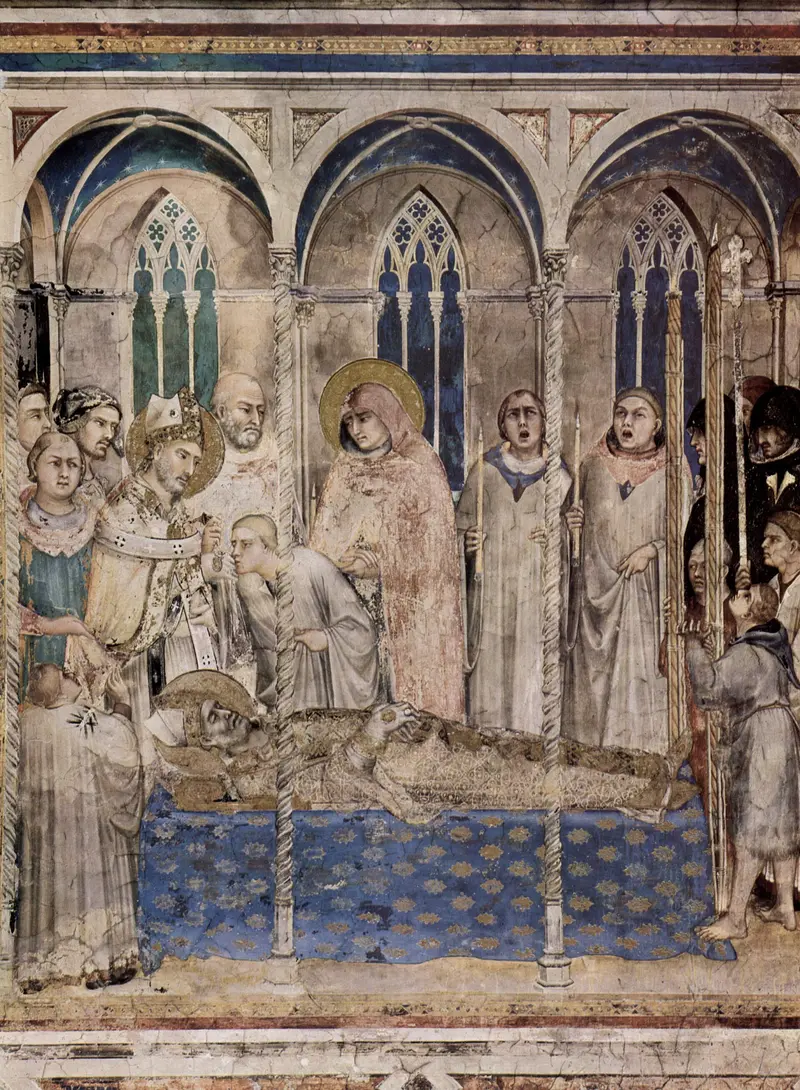
On 11 November he was buried in a Christian cemetery outside the town, beside the Roman road leading west. The basilica today places that cemetery under the rue des Halles.
Sixteen centuries over one grave
- 437
A wooden shelter
According to Gregory of Tours, Brice, the difficult disciple who succeeded Martin as bishop, put up a wooden building over the grave to shelter the tomb and the cloak.
- 470 or 471
The first basilica
Bishop Perpetuus replaced it with a basilica, dedicated on 4 July. Gregory describes it: 160 feet long, 52 windows, 120 columns, 8 doors. Perpetuus organised the welcome of pilgrims and had the list of Martin’s miracles put into verse.
- 508
Clovis
After his victory over the Visigoths, Clovis came to the basilica, where envoys of the emperor in Constantinople invested him as consul. He is credited with making Martin the patron of the Frankish kingdom.
- 562–563
Gregory of Tours
The young Gregory came as a sick pilgrim and, by his own account, was cured. As bishop he later wrote four books on the miracles of Saint Martin.
- 796
Alcuin
Charlemagne’s adviser Alcuin became abbot of Saint-Martin. Under him the scriptorium of Tours became one of the great book workshops of Europe. In 813 a church council ranked the pilgrimage to Tours beside the pilgrimage to Rome.
- 853
The Norsemen
Norse raiders burned the church. The community fled more than once with the relics, as far as Auxerre and Chablis in Burgundy, and brought them back in peacetime. In 918 the sanctuary was given its own fortified wall.
- 987
The king as abbot
From Hugh Capet until 1789, the king of France held the title of abbot of Saint-Martin.
- 1014
The great church
After a fire, the treasurer Hervé rebuilt the basilica on a vast Romanesque plan, consecrated on 4 July 1014. It ended with five towers and a nave 56 metres long. Tours was by then a main halt on the road to Santiago de Compostela, which took the name Via Turonensis from it.
- 1562
The shrine burned
During the Wars of Religion, Protestants sacked the basilica and burned the shrine. Only a piece of the skull and a bone of the arm were saved.
- 1797
Demolished
The Revolution made the church national property and then a stable. With its roof lead and iron ties stolen, the vaults fell in on 2 November 1797 and the town ordered it pulled down. Streets were driven across the site. Two towers were spared, one because the market wanted a clock.
- 1860
Found again
On 14 December 1860 Léon Papin-Dupont, a layman known as the holy man of Tours, dug with two companions in the cellars of the houses on the site and announced that he had found the tomb. Pilgrims returned.
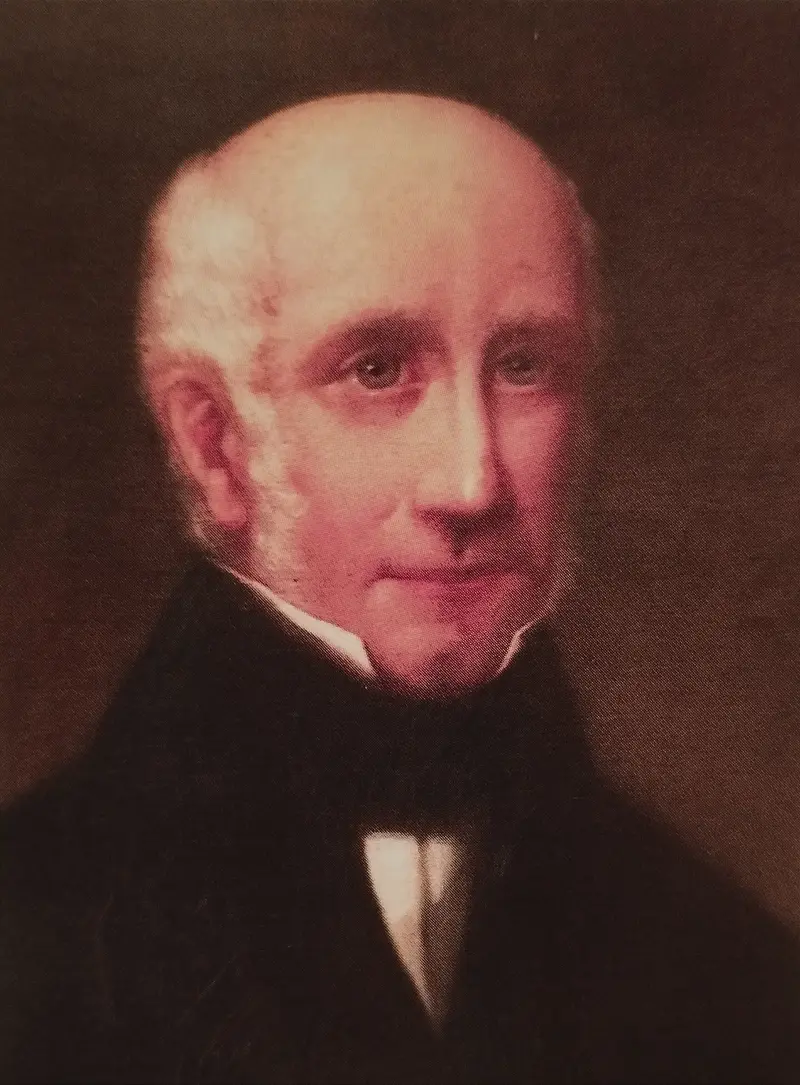
Léon Papin-Dupont (1797–1876), who found the tomb again in 1860. - 1886
The new basilica
After a long quarrel over its size, the architect Victor Laloux built a smaller church at right angles to the old one, above the tomb. The crypt opened in 1889 and the church in 1890. It was consecrated on 4 July 1925.
- 1996
John Paul II
On 21 September 1996 Pope John Paul II came to the basilica and met about two hundred people described as wounded by life: the sick, the disabled, the unemployed, the homeless, with those who accompany them.
- 2016
The statue comes down, and goes back
In 2014 the bronze Martin on the dome, loosened by storms, was taken down. Workers found a box of relics sealed in its right arm in 1889, known until then only by word of mouth. The restored statue was hoisted back on 15 October 2016, in the jubilee year for the 1700th anniversary of his birth.
What you find today
The walls of thanks
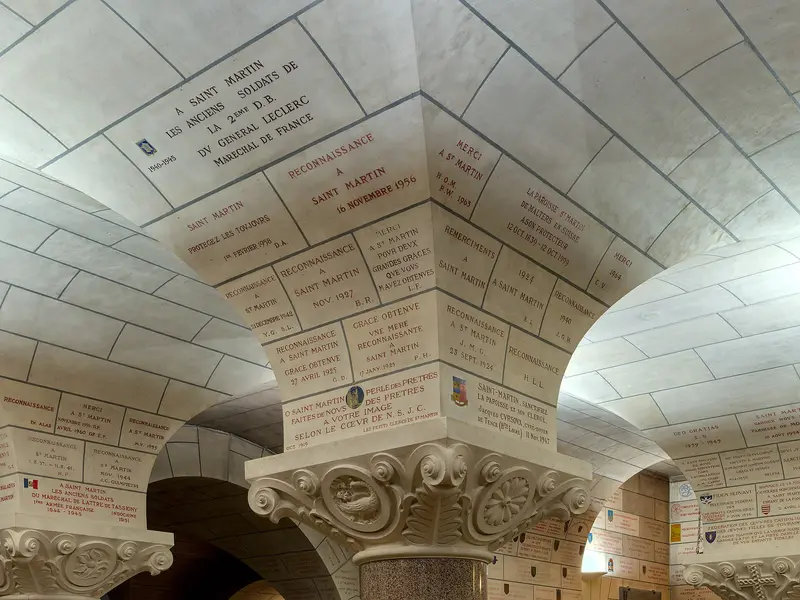
The walls around the tomb are covered with small marble plaques left by people whose prayers were answered. The custom continues: the basilica says the most recent is from 2017.
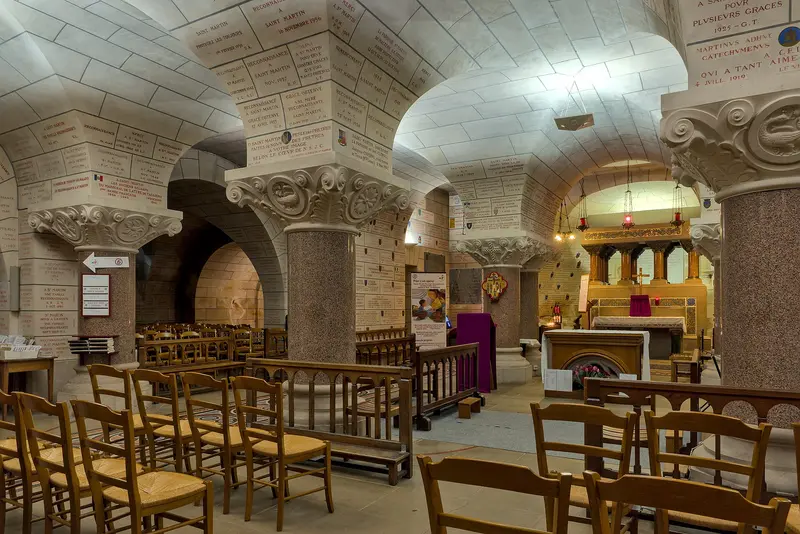
The crypt
Ten columns of Scottish marble divide the crypt into five aisles. The outline of the early church is marked in the paving. A glass panel from 1988 shows Martin kissing the leper. Sunday Mass is said here at 9.30.
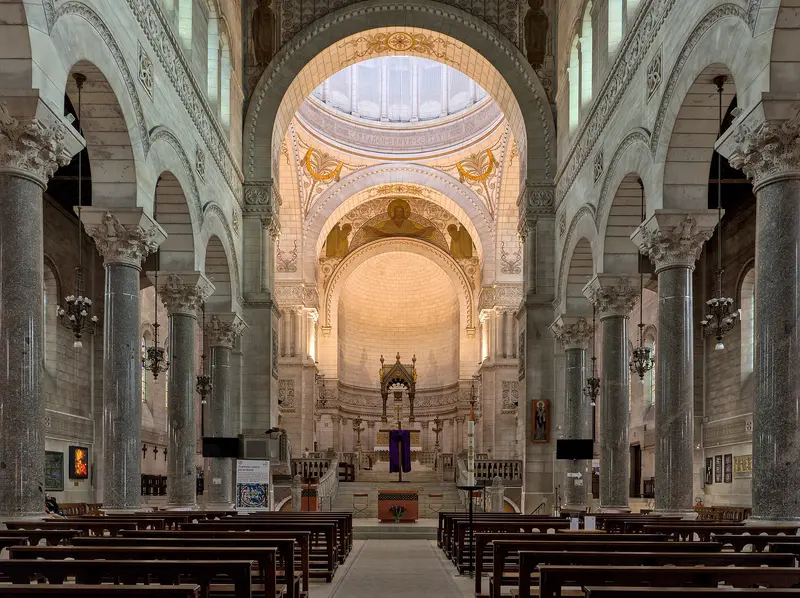
Above the tomb
The high altar stands directly over the grave and holds a relic of Martin’s head. The nave rests on fourteen columns, each cut from a single block of granite. Stained glass tells his life, and the finding of the tomb. Beside the altar stand the red and yellow umbrella and the bell that mark a minor basilica.
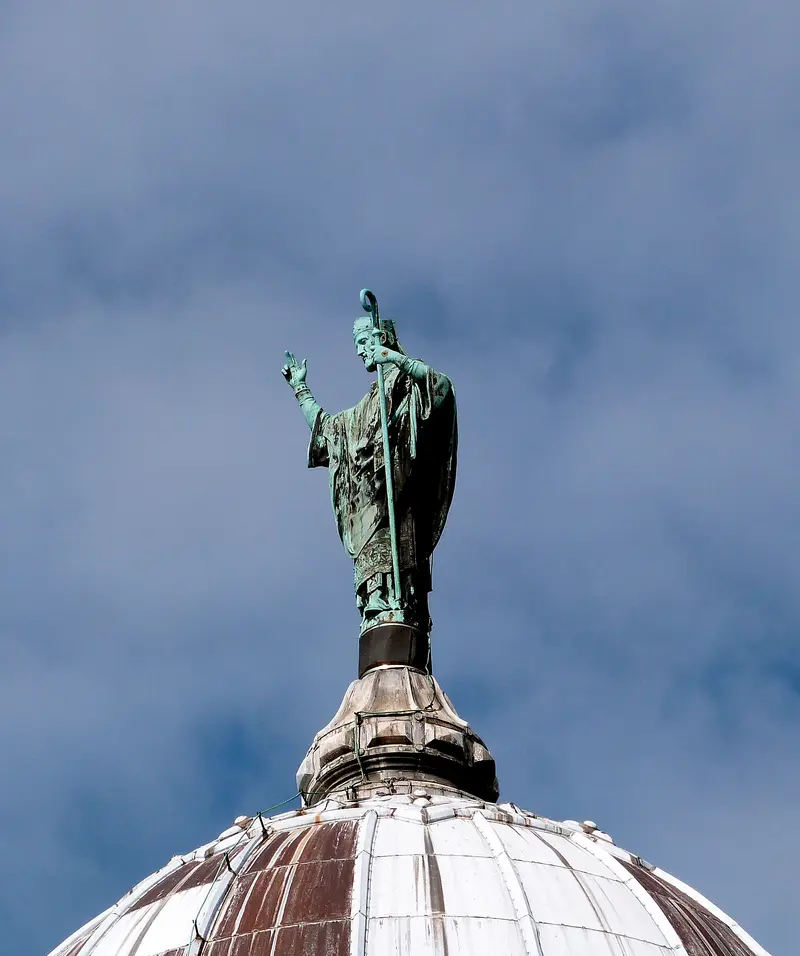
The bishop on the dome
A bronze Martin, over four metres tall, blesses the city from the top of the dome, about 51 metres above the street. A bone of the saint is sealed in his right arm, with relics of Brice, Perpetuus and Gregory of Tours.
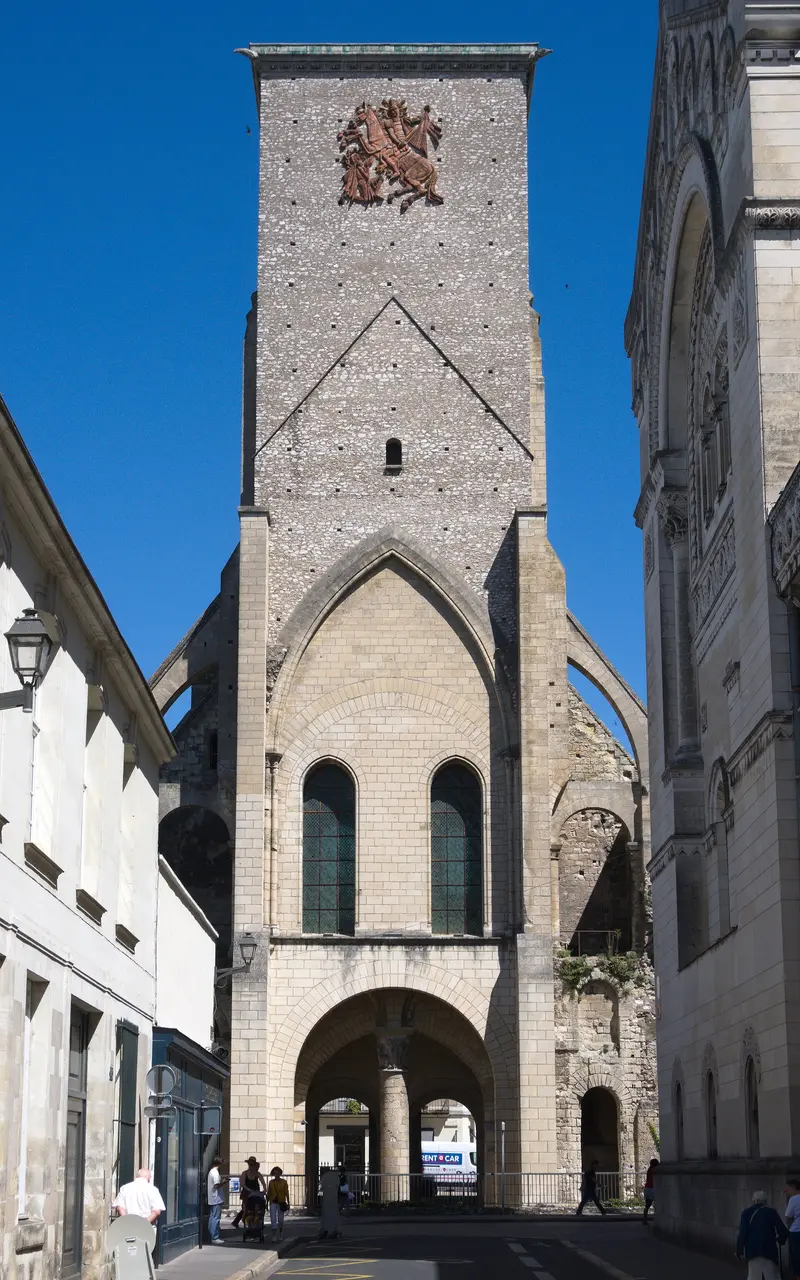
The Charlemagne Tower
The north tower of the old church still stands in the rue des Halles. Half of it fell into the street one evening in 1928, hurting no one, and was rebuilt in the 1960s. Tradition says that Charlemagne’s wife Luitgarde, who died in Tours in 800, is buried beneath it. The city runs guided visits.
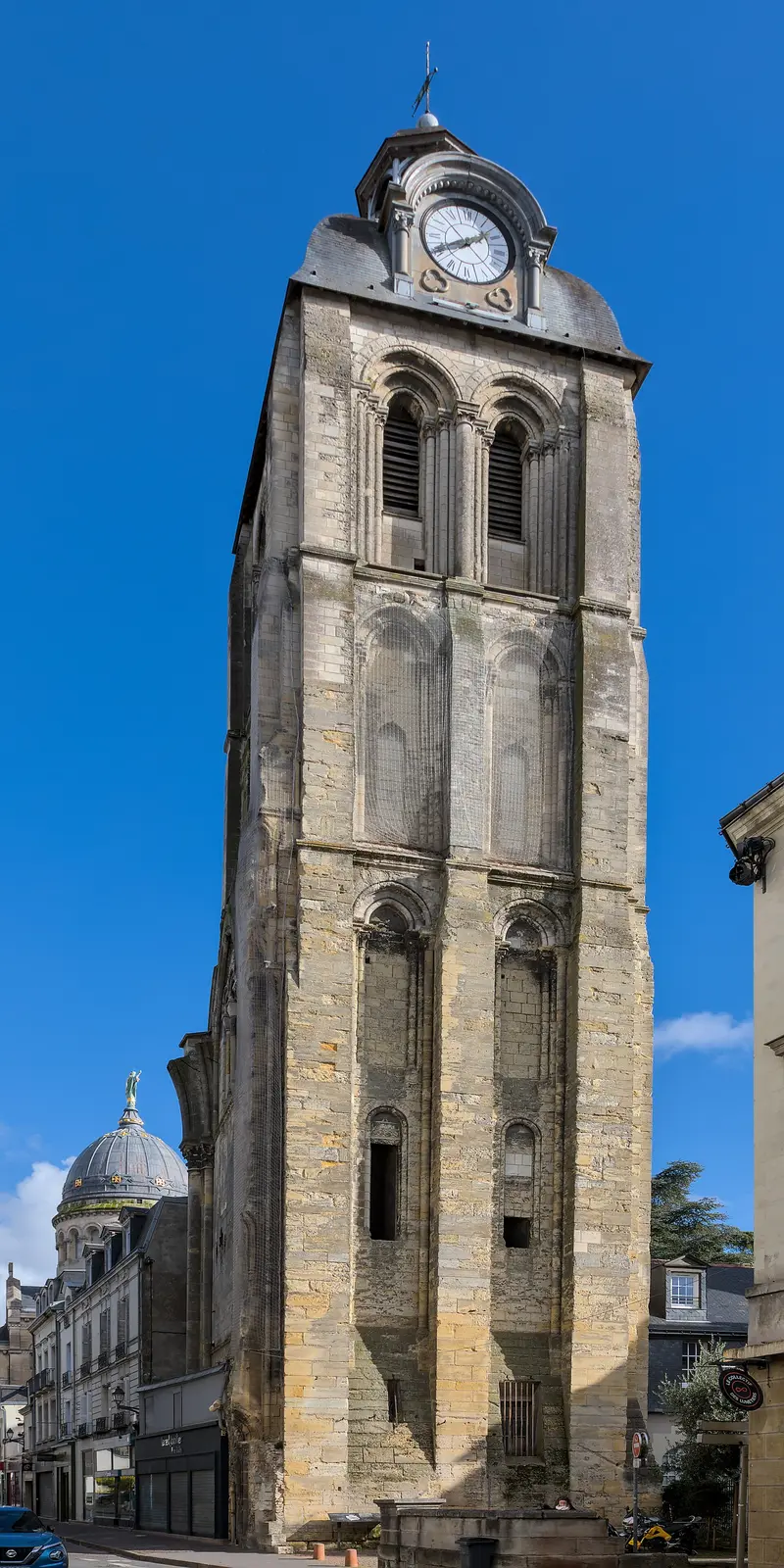
The Clock Tower
The other survivor was the treasury tower of the old west front. Its spire was replaced in 1795 by a small dome with a bell that rang the market hours. Broken arches of the lost nave still stick out from its corners.
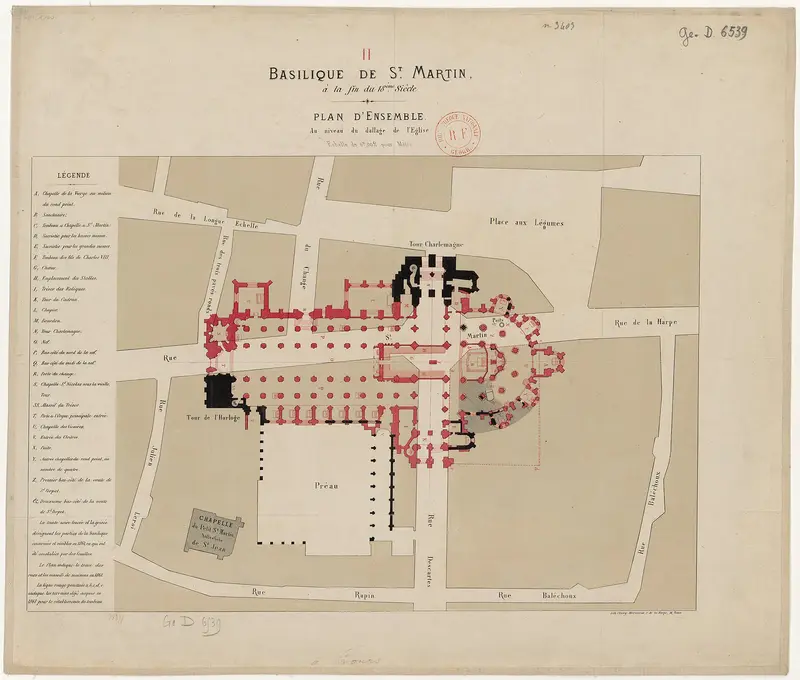
A church drawn in the street
Paving in the rue des Halles shows where the pillars of the old nave stood. Their foundations survive nearly three metres under the street and the houses.
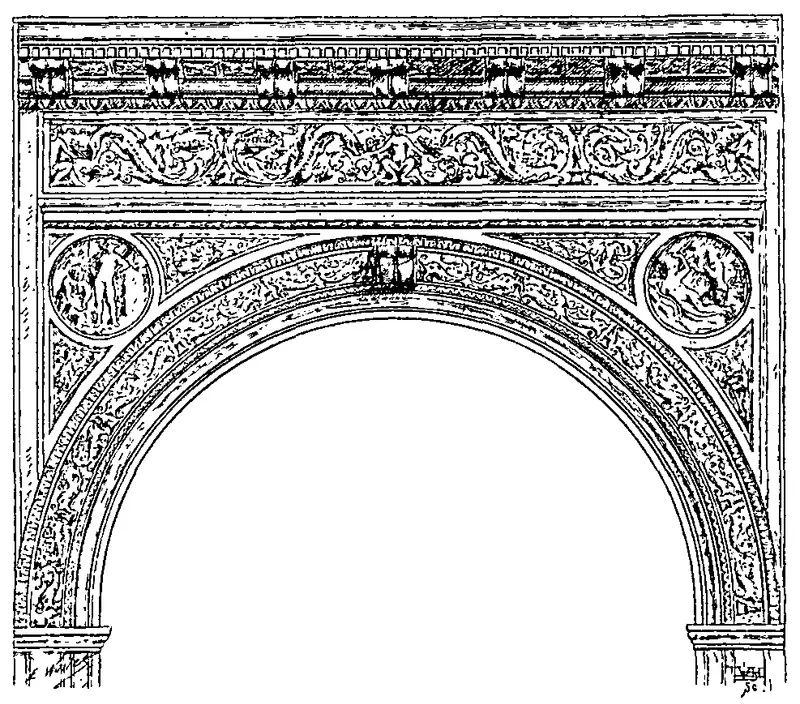
The cloister
One gallery of the Renaissance cloister, begun in 1508, survives among the old canons’ houses, with the thirteenth-century chapel of Saint John at its corner.
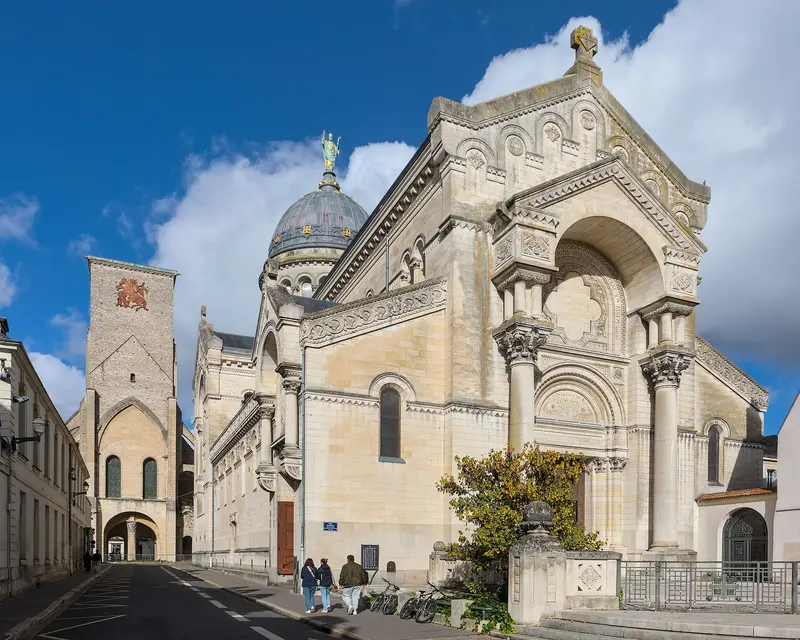
The basilica
Laloux’s church is built of limestone, granite and marble in a style borrowed from Byzantium. Its front faces south onto a forecourt named after John Paul II.
Walking to the tomb
The Via Sancti Martini is a network of paths across Europe that all end at the tomb. The Council of Europe certified it as a Cultural Route in 2005. Together the routes cover more than 5,000 kilometres.
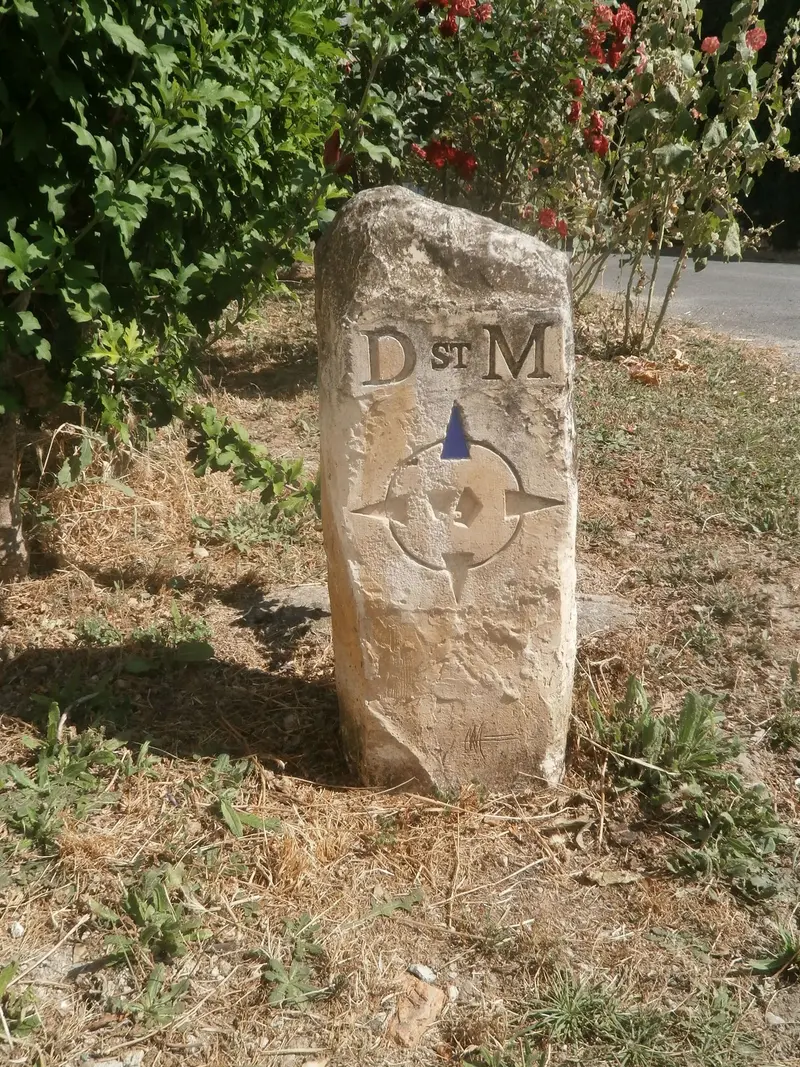
- From Szombathely
- The long road: from his birthplace in Hungary, through Pavia where he grew up, to his grave. It was opened over its full length in 2016.
- The St Martin’s Summer path
- From Candes to Tours along the Loire, the way the body was brought. Four or five days on foot, a little over 100 kilometres. It enters Tours by the street where tradition says the body rested.
- The Trier path
- From Tours to Worms and Trier in Germany, recalling his journeys to the imperial court. It leaves by Marmoutier, Vouvray and Amboise.
- The Bishop’s path
- From Poitiers and Ligugé to Tours, the road by which he was brought from his monastery in 371 to be made bishop.
- To Zaragoza and to Utrecht
- Two further branches, one into Spain and one to the Dutch city whose cathedral is dedicated to him.
- The road to Santiago
- The Via Turonensis, the northernmost of the four French roads to Compostela, takes its name from Tours. Medieval pilgrims stopped at Martin’s tomb on the way.
Two more places
Candes, where he died
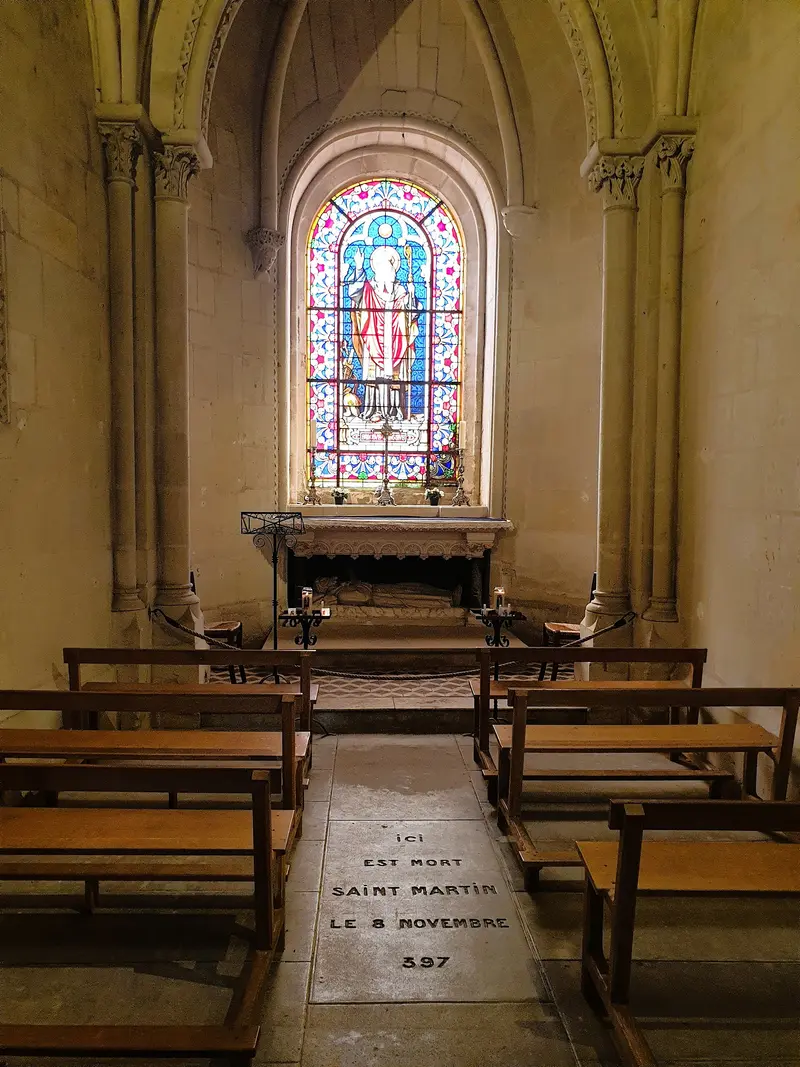
The church at Candes stands above the meeting of the Vienne and the Loire. Its north chapel is said to occupy the site of the house where Martin died. Pilgrims came here although the church never held his relics.
Marmoutier, where he lived
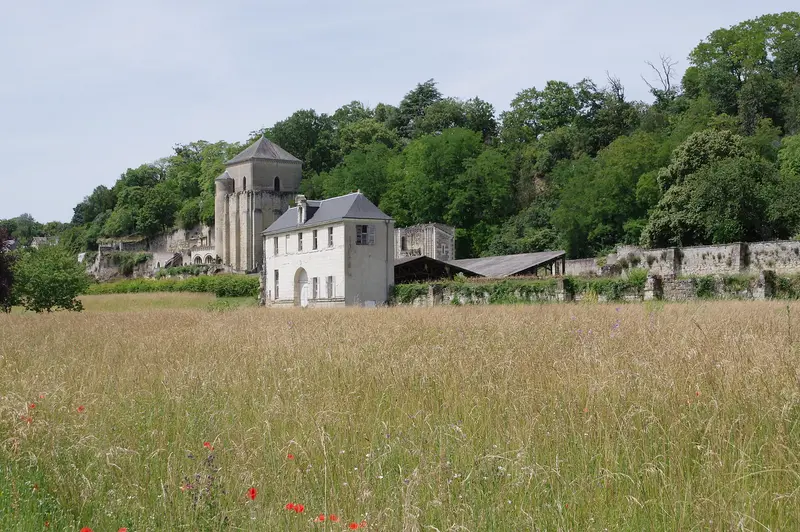
Across the Loire from Tours, the caves of his first monks survive in the hillside, among them one called the Rest of Saint Martin. The ruins belong to the city and can be visited in part.
How to get there
The basilica is in the old centre of Tours, about a quarter of an hour on foot from Tours railway station.
Rue Descartes, 37000 Tours, France
Get directions ↗ Open in Google Maps ↗
The map comes from Google. It loads only when you ask for it, so nothing is sent to Google before that.
Before you go
- Basilique Saint-Martin, rue Descartes, 37000 Tours, France. The entrance is on the forecourt named after John Paul II.
- The regional tourist board lists it as open every day from 7.30 to 19.00, free of charge, and warns that the hours are not guaranteed.
- Mass: Monday to Saturday at 11.00 in the basilica. Sunday at 9.30 in the crypt and at 11.00 in the basilica.
- The Charlemagne Tower is visited on guided tours run by the city of Tours.
- These details were read in November 2026. Check with the basilica before you travel.
Two sentences
Wherever Christ is known, Martin is honoured.
If Christ put up with Judas, I can surely put up with Brice.
The tomb is in Tours. The man is in the book.
Compiled in November 2026 from the basilica’s own website, the French, English and German Wikipedia articles on the basilica and its towers, the Council of Europe’s page on the Saint Martin of Tours Route, and the French heritage register. Where sources disagree on a date, both are given. If something here is wrong, tell us. Found a mistake? Tell us
Pictures (20)
- The tomb of Saint Martin in the crypt of the Basilica of Saint Martin in Tours, France, with its columned stone canopy, altar and lamps, surrounded by ex-voto plaques, photographed in 2025. — Benjamin Smith, CC BY-SA 4.0, Wikimedia Commons
- The reliquary holding a relic of Saint Martin, displayed behind a gilded grille inside the saint's tomb in the crypt of the Basilica of Saint Martin in Tours, France, photographed in 2016. — Fab5669, CC BY-SA 4.0, Wikimedia Commons
- The Chapel of Saint Martin in the collegiate church of Candes-Saint-Martin, France, with the floor slab inscribed 'Ici est mort saint Martin le 8 novembre 397' marking the place of his death, photographed in 2024. — Chris06, CC BY-SA 4.0, Wikimedia Commons
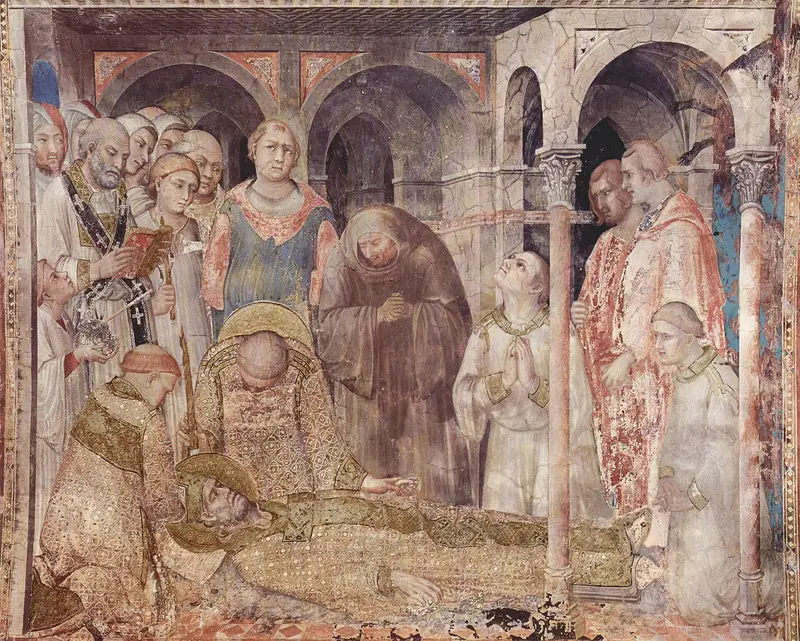
- Simone Martini, The Death of Saint Martin (lower part of the scene, without the angels above), fresco, c. 1322-1326, Chapel of Saint Martin, Lower Basilica of San Francesco, Assisi, Italy. — Simone Martini, Public domain, Wikimedia Commons
- Simone Martini, The Burial (Funeral) of Saint Martin, fresco, c. 1322-1326, Chapel of Saint Martin, Lower Basilica of San Francesco, Assisi, Italy. — Simone Martini, Public domain, Wikimedia Commons
- Workshop of Derick Baegert, The Death of Saint Martin of Tours, panel painting, c. 1490, LWL-Museum für Kunst und Kultur, Münster, Germany; the dying bishop is surrounded by clergy while an angel and a two-faced demon wait at his bedside. — Workshop of Derick Baegert, Public domain, Wikimedia Commons
- The confluence of the Vienne (foreground) and the Loire at Candes-Saint-Martin, France, where Saint Martin died and from where his body was taken upriver to Tours; photographed in 2011. — LPLT, CC BY-SA 3.0, Wikimedia Commons
- Portrait of the Venerable Léon Papin-Dupont (1797-1876), the 'Holy Man of Tours', from a 19th-century oil painting by an unknown artist reproduced on a devotional card of the Confraternity of the Holy Face of Tours. — Unknown author, Public domain, Wikimedia Commons
- Ex-voto thanksgiving inscriptions to Saint Martin covering the vaults above a carved capital in the crypt of the Basilica of Saint Martin in Tours, France, photographed in 2025. — Benjamin Smith, CC BY-SA 4.0, Wikimedia Commons
- The crypt of the Basilica of Saint Martin in Tours, France, seen from its east entrance, with the tomb of Saint Martin in the background and walls covered in ex-voto inscriptions, photographed in 2025. — Benjamin Smith, CC BY-SA 4.0, Wikimedia Commons
- The nave of the Basilica of Saint Martin in Tours, France, looking towards the choir and the dome, photographed in 2025. — Benjamin Smith, CC BY-SA 4.0, Wikimedia Commons
- The bronze statue of Saint Martin blessing the city from the top of the dome of the Basilica of Saint Martin in Tours, France, photographed in 2012. — ZohaStel, CC BY-SA 3.0, Wikimedia Commons
- The Tour Charlemagne in Tours, France, a surviving tower of the medieval collegiate church of Saint Martin demolished after the French Revolution, with the present basilica at right, photographed in 2022. — Mussklprozz, CC BY-SA 4.0, Wikimedia Commons
- The Tour de l'Horloge (Clock Tower) in Tours, France, a surviving tower of the medieval collegiate church of Saint Martin, with the dome of the present basilica in the background, photographed in 2025. — Benjamin Smith, CC BY-SA 4.0, Wikimedia Commons
- Line drawing of a carved Renaissance arcade of the cloister of Saint-Martin in Tours, France, figure 91 from Léon Palustre, L'Architecture de la Renaissance (1892). — Léon Palustre, Public domain, Wikimedia Commons
- The Basilica of Saint Martin in Tours, France, with its dome crowned by the statue of the saint (right) and the medieval Tour Charlemagne (left), photographed in 2025. — Benjamin Smith, CC BY-SA 4.0, Wikimedia Commons
- Printed plan titled 'Basilique de St Martin à la fin du 18e siècle - plan d'ensemble', showing the ground plan of the medieval collegiate church of Saint Martin in Tours before its demolition, laid over the later streets, with the Tour Charlemagne, the Tour de l'Horloge and the cloister; printed in Tours, kept at the Bibliothèque nationale de France. — Unknown author (Bibliothèque nationale de France), Public domain, Wikimedia Commons
- A stone marker waymarking the Via Sancti Martini (Way of Saint Martin) at Candes-Saint-Martin, France, photographed in 2016. — Joël Thibault, CC BY-SA 4.0, Wikimedia Commons
- The collegiate church of Saint Martin at Candes-Saint-Martin, France, built on the place where Saint Martin died in 397, photographed in 2011. — LPLT, CC BY-SA 3.0, Wikimedia Commons
- General view of the remains of Marmoutier Abbey, the monastery founded by Saint Martin on the bank of the Loire at Tours, France. — AlSepPhoenix, CC BY 4.0, Wikimedia Commons


